thebookatreat

Welcome to Book A Treat
Edit Template
Welcome to Book A Treat
Edit Template

Blog

Your blog category

Blog

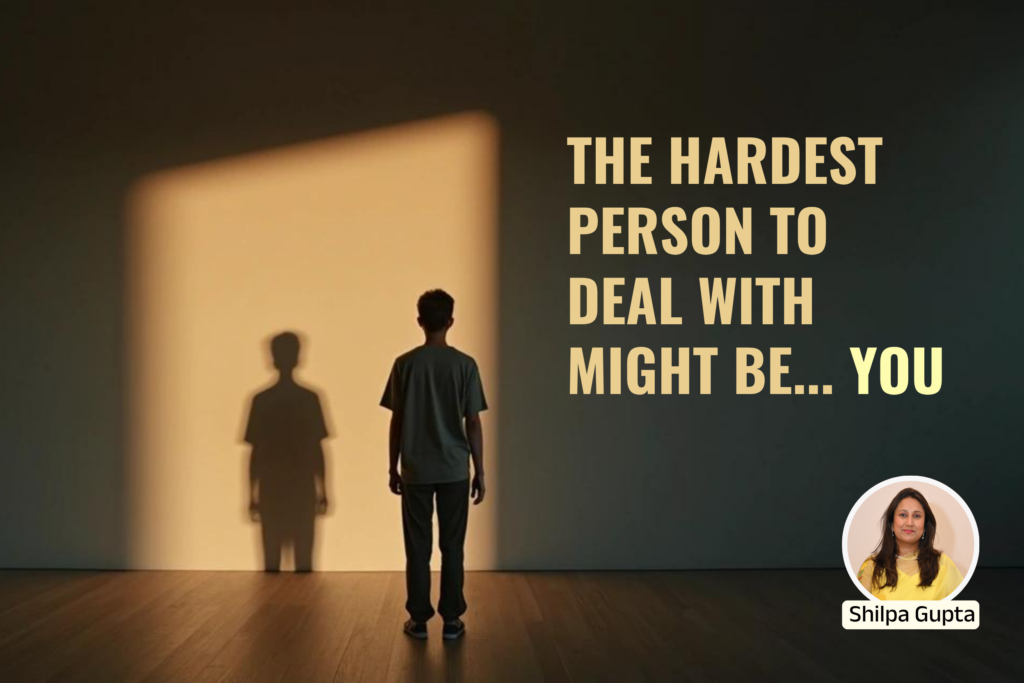
The Hardest Person to Deal With Might Be… You

The Hardest Person to Deal With Might Be… You By Shilpa Gupta We often find ourselves talking about the difficult people in our lives. The colleague who never listens. The friend who can’t handle feedback. The partner who always has to have the last word. We dissect their behavior, replay conversations in our minds, and wonder why relationships have to be so complicated. But what if we paused for a moment and asked ourselves a different question? What if, sometimes, the difficult person is me? It’s not an easy thought to entertain. Yet it may be one of the most powerful questions we can ask ourselves. Self-awareness is the foundation of every healthy relationship. It allows us to replace blame with understanding, defensiveness with curiosity, and conflict with connection. So, how do you know when you might be contributing to the problem? Here are a few subtle signs. You speak in extremes. If your conversations are filled with words like always and never, chances are you’re making the other person feel misunderstood rather than heard. Instead of saying, “You never listen to me,” try, “I felt unheard when I was speaking earlier.” Specific experiences open doors. Generalizations close them. You criticize the person instead of the behavior. There’s a world of difference between saying, “You’re selfish,” and “I felt hurt when you didn’t include me in the decision.” One attacks identity. The other invites conversation. You’re keeping score. Healthy relationships aren’t accounting books. If you’re mentally counting who apologized last, who sacrificed more, or who made the bigger mistake, it’s often a sign that a deeper emotional need—perhaps appreciation, fairness, or acknowledgment—isn’t being met. Instead of adding another tally mark, express what you truly need. People seem cautious around you. Do friends hesitate before bringing up certain topics? Do family members carefully choose their words around you? Sometimes the biggest feedback isn’t what people say—it’s what they avoid saying. Drama seems to follow you. Every relationship experiences conflict. But if disagreements consistently show up across friendships, workplaces, and families, it may be worth asking whether there’s a recurring pattern in the way you’re responding. Awareness isn’t about blame. It’s about growth. You expect grace—but don’t offer it. When we’re late, we explain. When someone else is late, we judge. We naturally understand our own circumstances while assuming the worst about others’. Empathy begins when we extend the same kindness we hope to receive. You stay angry longer than necessary. Anger is a natural emotion. Living in it isn’t. The longer we remain attached to our version of the story, the harder it becomes to see another perspective. Healing often begins the moment we ask, “Could there be another side to this?” You become defensive before you become curious. Have you ever noticed how quickly your mind starts preparing a defense when someone offers criticism? Instead of listening, we gather evidence to prove why we’re right. What if we paused and simply asked, “Is there even a small part of this that’s true?” Owning even a tiny part of our contribution doesn’t weaken us. It strengthens trust. A Thought to Leave You With Being “the difficult person” isn’t an identity. It’s a moment. A habit. A reaction. And habits can change. The strongest relationships aren’t built by people who never argue. They’re built by people who are willing to reflect, take responsibility, apologize when needed, and return to the conversation with humility. So the next time conflict arises, before asking, “Why are they so difficult?” Perhaps ask, “What role am I playing in this story?” That single question has the power to transform not just conversations—but relationships, workplaces, families, and even the relationship you have with yourself. Because growth doesn’t begin when we change others. It begins the moment we become willing to change ourselves.  

Blog

Lessons from the Plate and Page

Lessons served on a plate…. Sometimes the deepest life lessons come not from books, but from the food that sits quietly on our plate.   Have you ever wondered whether the foods we eat every day can teach us important life lessons? From the twisted path of a jalebi to the patience required for a mango to ripen, every food carries a message that can inspire and guide us. The meals we cherish are more than food-they are struggle, patience, and hope. Food nourishes our bodies, but also feeds our emotions. Behind every bite lies a journey. Look beyond taste. It’s okay if you are not in the best shape of your life. Being sweet is all that matters ~ JALEBI   Don’t underestimate yourself. The softest of people can withstand great pressure. ~ DHOKLA   Don’t lose hope. Sometimes when life breaks you, it also fills that hole with good things. ~ PANI PURI   Even your presence is enough to comfort many. Just be there. ~ CHAI   Share your feelings. Everyone needs to blow off some steam from time to time. ~ MOMOS   There’s nothing greater than being the reason you sleep soundly. ~ CHOLE BHATURE   Patience is rewarded, as the sweetest fruits take time to ripen. ~ MANGO So next time, if you ever feel dejected or stuck in the complex maze of life, look into your plate and dive deep into the unique messages each food item brings.    

Blog

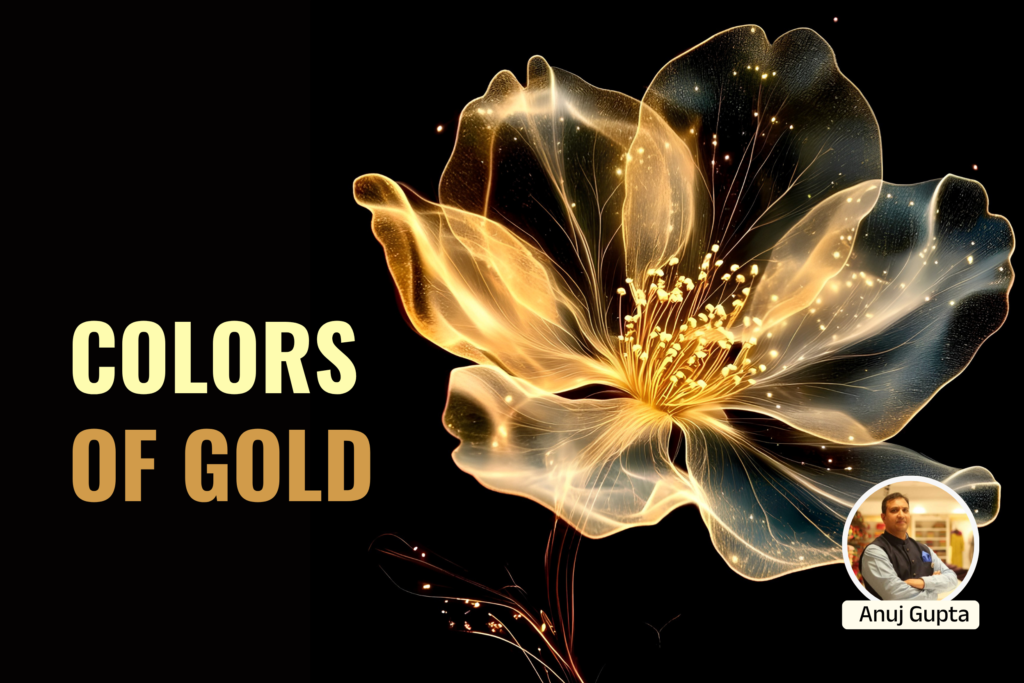
Colors of Gold

Beyond Yellow Gold: The Fascinating World of Gold Colors in Modern Jewellery. Most people think gold comes in only one color. But gold can appear in many beautiful shades depending on the metals mixed with it. – Black Gold and grey gold are growing in men’s jewelry collections. – Grey Gold – Often mixed with palladium. Clean, understated and contemporary. – Purple Gold – Made using aluminium mixtures. Decorative and uncommon in fine jewelry. – Green Gold – Mixed with silver and zinc. Rare and slightly green in apoereance. – Red Gold – Contains even more copper than rose gold, giving it a deeoer red apoereance. Bold and unique. – Rose Gold – Created with copoer content. Warm pink tone that has become very popular in modern jewelry. – Yellow gold is making a strong comeback in luxury and vintage-inspired designs. Pure gold (24Kt) is naturally soft and bright yellow. To make it stronger and more suitable for jewelry, jewellers mix it with other metals. This process creates different gold colors.

Blog

Setting Boundaries

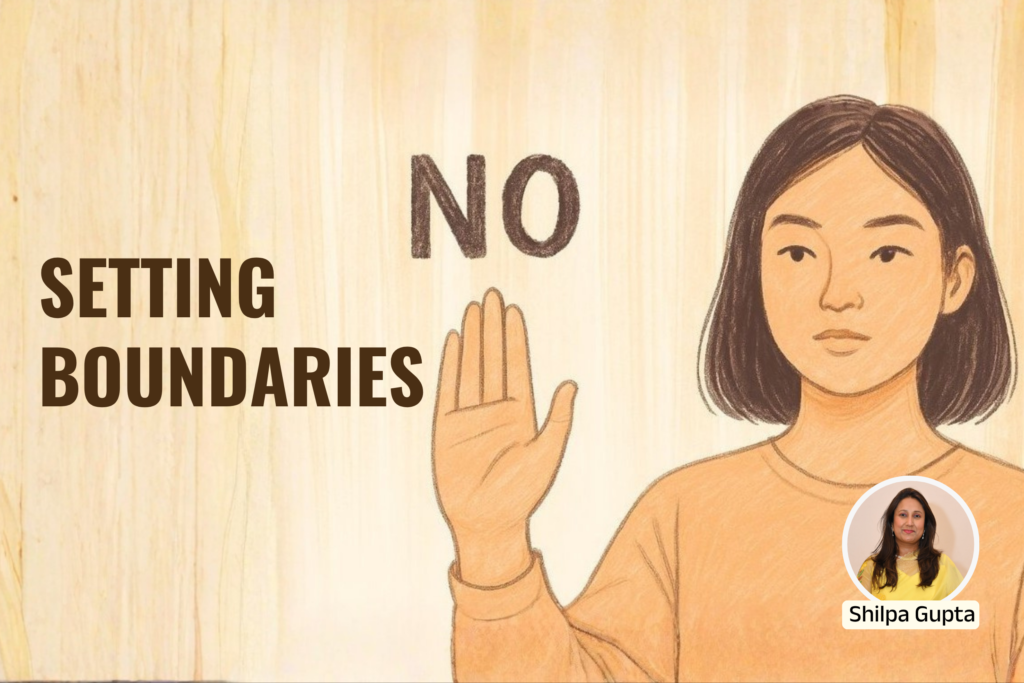
# Healthy Boundaries: The Key to Protecting Your Peace For a long time, I believed being kind meant always saying yes, pleasing others, and putting everyone’s needs before my own. But over time, that constant giving led to exhaustion, resentment, and emotional burnout. I realized I didn’t need to become less caring—I needed healthier boundaries. ## What Are Boundaries? Boundaries are the limits we set to protect our emotional, physical, and mental wellbeing. They define what is acceptable and what is not. Healthy boundaries help us: * Build respectful relationships * Increase self-worth * Reduce stress and anxiety * Protect our time and energy ## Common Types of Boundaries **Physical Boundaries** involve personal space, privacy, and your body. Examples: unwanted touching, invading privacy, checking your phone. **Emotional Boundaries** involve separating your feelings from others’. Examples: feeling responsible for someone else’s emotions, people-pleasing, or absorbing others’ moods. ## Signs Your Boundaries Are Being Crossed You may feel: * Resentful * Guilty * Overwhelmed * Anxious * Taken for granted * Unable to say no Your body may also signal stress through tension, tightness, or discomfort. ## Why We Struggle to Set Boundaries Many people fear conflict, rejection, judgment, or hurting others. Sometimes we believe love must be earned through sacrifice, which leads to unhealthy patterns. ## How to Build Healthy Boundaries ### 1. Know Your Limits Recognize what feels uncomfortable, draining, or disrespectful. ### 2. Communicate Clearly Use calm and assertive language. Example: *“I value privacy, so I’m not comfortable with my phone being checked.”* ### 3. Learn to Say No “No” is a complete sentence. You do not always owe explanations. ### 4. Stay Consistent Others may resist at first. Repeat your boundary calmly and firmly. ### 5. Prioritize Self-Care When you respect your needs, you show others how to respect them too. ## Respect Others’ Boundaries Too Healthy relationships are mutual. Just as you want your limits respected, honor the comfort and space of others. ## Final Thought Boundaries are not walls to shut people out—they are bridges to healthier, more respectful relationships. You don’t need to be less kind; you simply need to value yourself enough to protect your peace.

Scroll to Top